Research
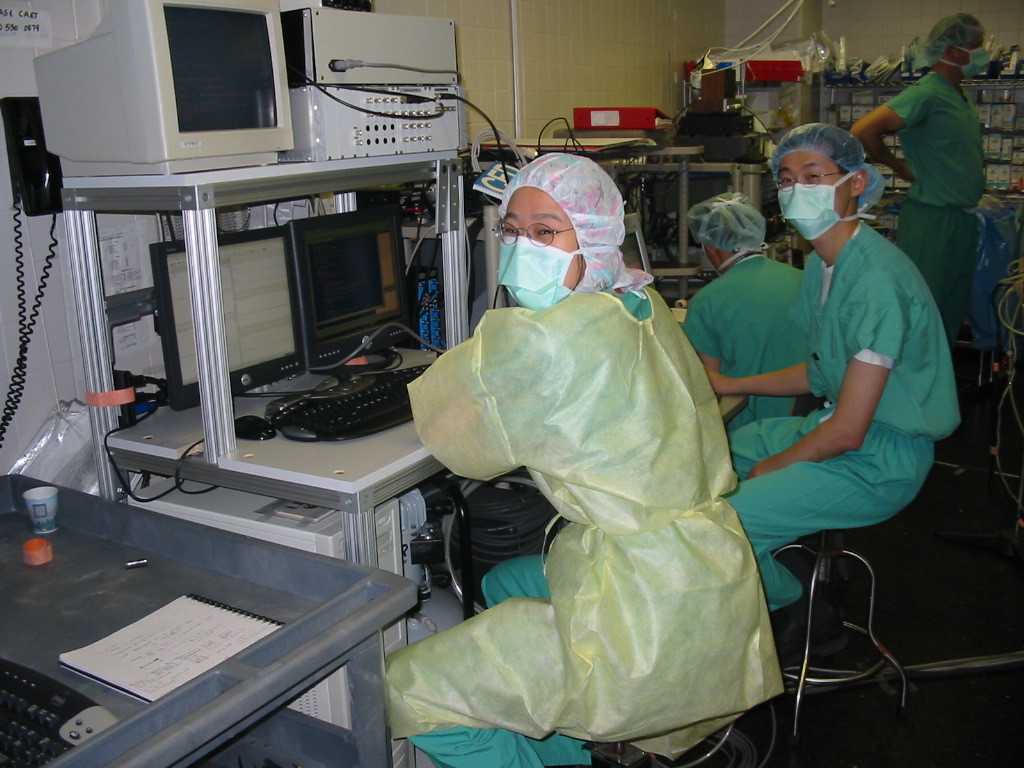
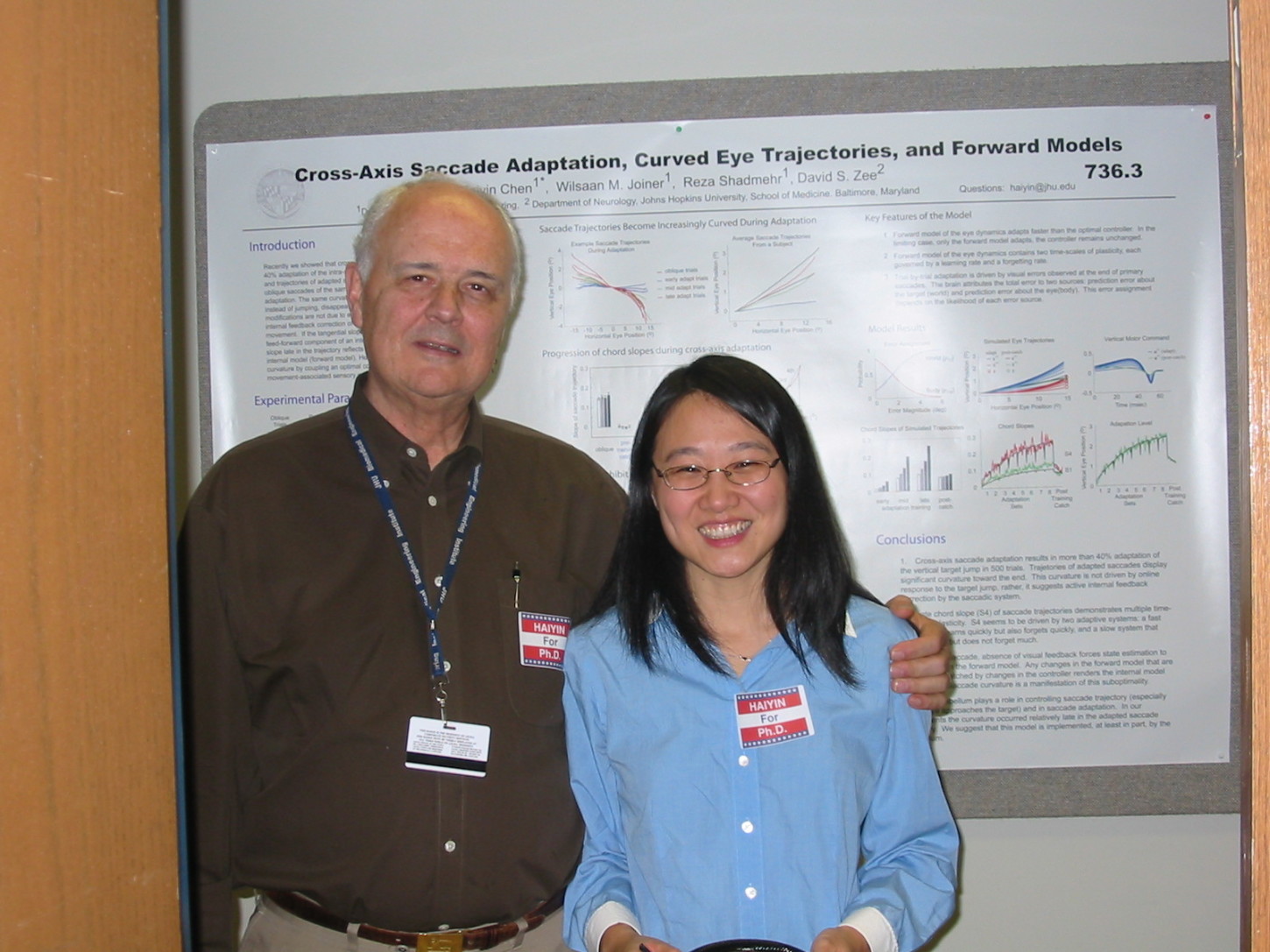
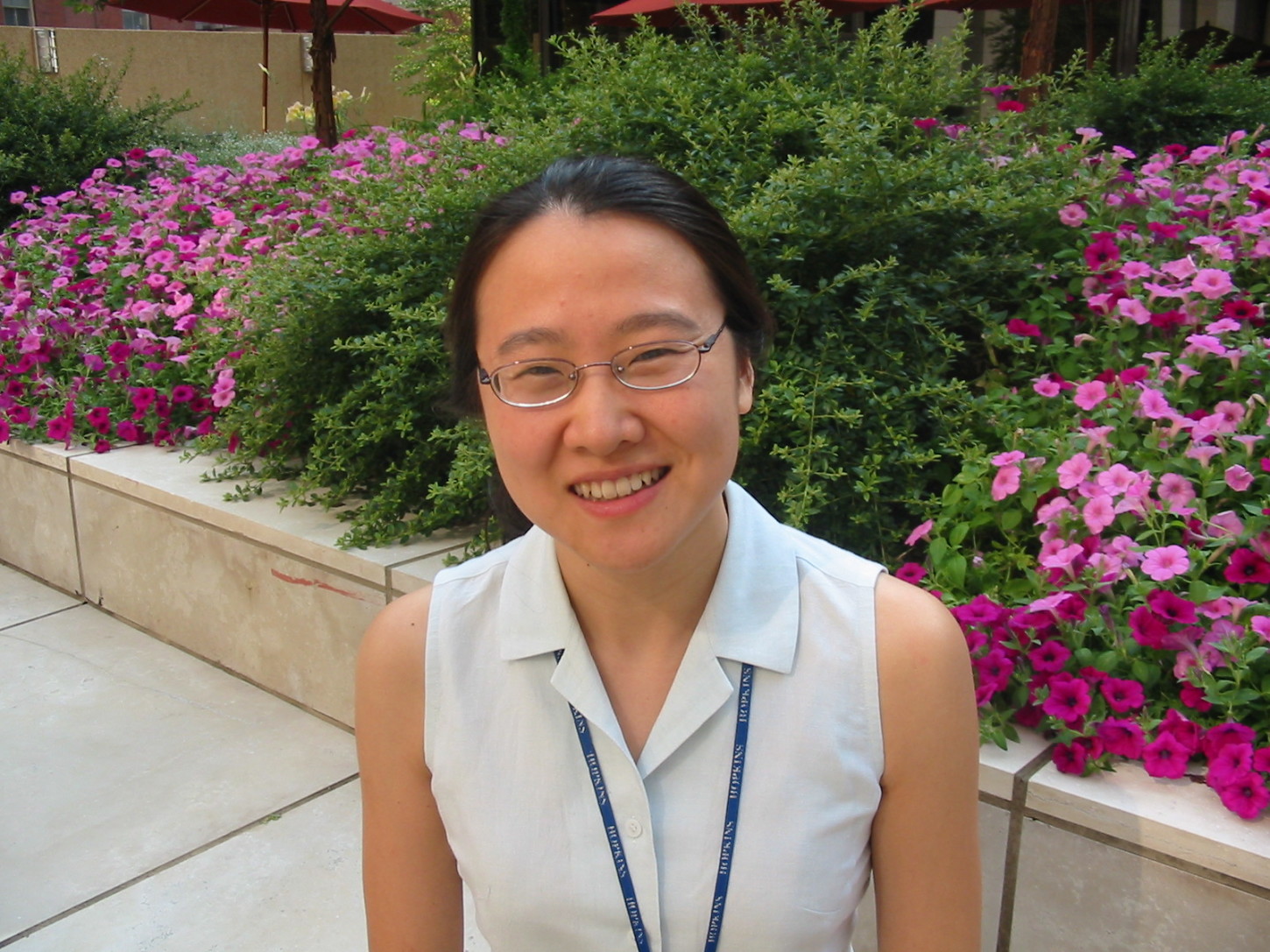
Haiyin graduated with a BS from Princeton University and then joined the lab as a PhD student in the BME Program. She was the first graduate student in our lab to perform research using human psychophysics combined with human single cell neurophysiology (experiments that were conducted in the Hopkins operating rooms). Before Haiyin, we focused entirely on study of reaching movement. However, Haiyin added the study of saccadic eye movements and through examination of patients with cerebellar damage, discovered that during a single saccade, the cerebellum steers the eyes to its intended destination through internal monitoring of the motor commands. She demonstrated that a similar organization existed during reaching movements, and that its anatomy was likely through cerebello-thalamic pathways to the cerebral cortex. She completed her PhD in 2006, and subsequently became a research scientist at Lawrence Livermore National Laboratory, then Staff Scientist at Genentech. She is currently Staff Scientist at Microsoft Research.
Ideas developed by Haiyin
Selected publications
Xu-Wilson M, Chen-Harris H, Zee DS, Shadmehr R. Cerebellar contributions to adaptive control of saccades in humans. Journal of Neuroscience. 2009;29:12930–12939.
Chen-Harris H, Joiner WM, Ethier V, Zee DS, Shadmehr R. Adaptive control of saccades via internal feedback. Journal of Neuroscience. 2008;28:2804–2813. [Supplementary material] [News & Views]
Chen H, Hua SE, Smith MA, Lenz FA, Shadmehr R. Effects of cerebellar thalamus disruption on adaptive control of reaching. Cerebral Cortex. 2006;16:1462–1473.
Chen H. Cerebellar and Cerebellar-Thalamic Contributions to Motor Adaptation. PhD dissertation, Johns Hopkins University. 2007.
Gallery