Research
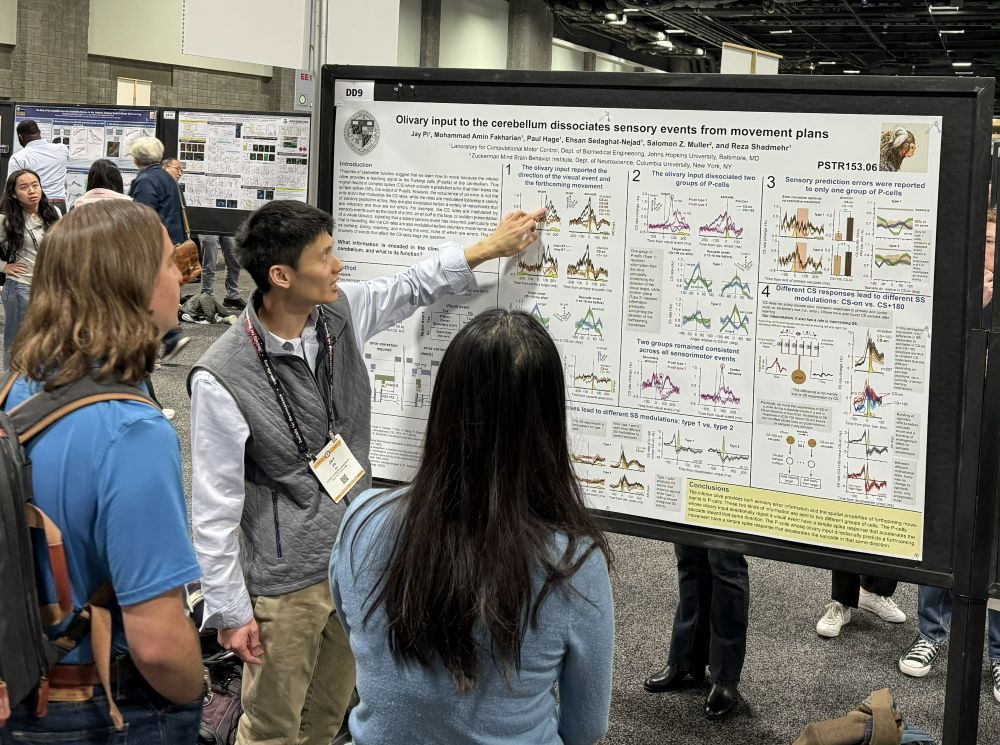
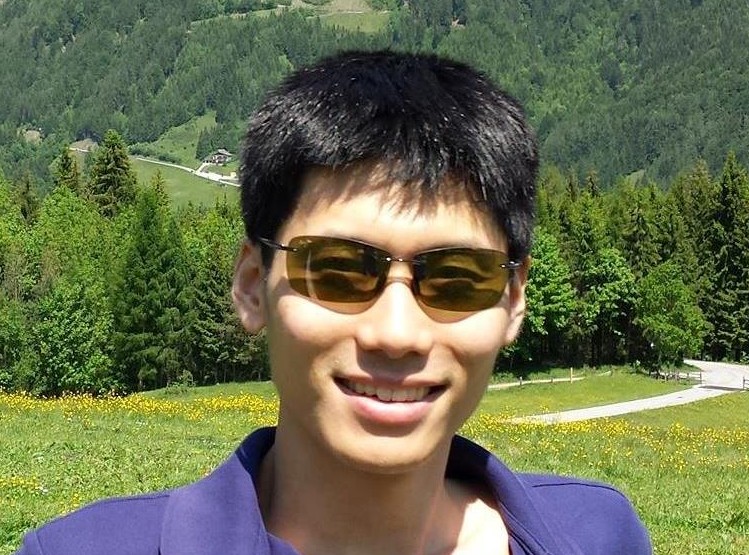
Jay joined the lab in 2018 as an PhD student in the BME program, after receiving a BS in Mechanical Engineering, as well as a BS in Neurobiology, both with the highest honors from the University of Texas, Austin. He had a wide range of undergraduate research experiences, from studying the effects of viral infections on drug metabolism to the manufacturing design of mechanical systems. Jay wrote the entire behavioral software system that we use in training our marmosets. He then recorded activities of neurons in the cerebellar cortex during a task in which the subjects experienced an error, but had the option of either correcting that error, or simply observe it and withhold their correction. He discovered that the climbing fiber input to the cerebellum encoded both the direction of a random sensory event, as well as the direction of a forthcoming voluntary movement. Surprisingly, these two kinds of information were transmiteed to different Purkinje cells. His work suggests that cerebellar neurons that learn from different teachers (climbing fibers) contribute to different aspects of behavior. Jay discovered that in the oculomotor region of the vermis, the olive informed a subset of P-cells about sensory events that were prediction errors, but all P-cells about the forthcoming movement. Using the information content of the olivary input he labeled the P-cells and produced a population code, revealing two groups with simple spikes that were antagonistic to each other, one contributing to movement initiation, the other signaling movement end. Jay graduated in 2024 and subsequently joined a venture capital technology group.
Ideas developed by Jay
Selected publications
Pi JS. New perspective on the role of complex spikes. PhD dissertation, Johns Hopkins University. 2024.
Pi JS, Fakharian MA, Hage P, Sedaghat-Nejad E, Muller SZ, Shadmehr R. The olivary input to the cerebellum dissociates sensory events from movement plans. Proceedings of the National Academy of Sciences. 2024;121(17):e2318849121.
Hage P, Jang IK, Looi V, Fakharian MA, Orozco SP, Pi JS, Sedaghat-Nejad E, Shadmehr R. Effort cost of harvest affects decisions and movement vigor of marmosets during foraging. eLife. 2023;12:RP87238.
Muller SZ, Pi JS, Hage P, Fakharian MA, Sedaghat-Nejad E, Shadmehr R. Complex spikes perturb movements and reveal the sensorimotor map of Purkinje cells. Current Biology. 2023;33(22):4869–4879.e3.
Sedaghat-Nejad E, Pi JS, Hage P, Fakharian MA, Shadmehr R. Synchronous spiking of cerebellar Purkinje cells during control of movements. Proceedings of the National Academy of Sciences. 2022;119(14):e2118954119.
Sedaghat-Nejad E, Fakharian MA, Pi JS, Hage P, Kojima Y, Soetedjo R, Ohmae S, Medina JF, Shadmehr R. P-sort: an open-source software for cerebellar neurophysiology. Journal of Neurophysiology. 2021;126(4):1055–1075.
Hage P, Fakharian MA, Shoup AM, Pi JS, Sedaghat-Nejad E, Orozco SP, Jang IK, et al. Purkinje cells of the cerebellum control deceleration of tongue movements. PLoS Biology. 2025;23(4):e3003110.
Gallery