Research
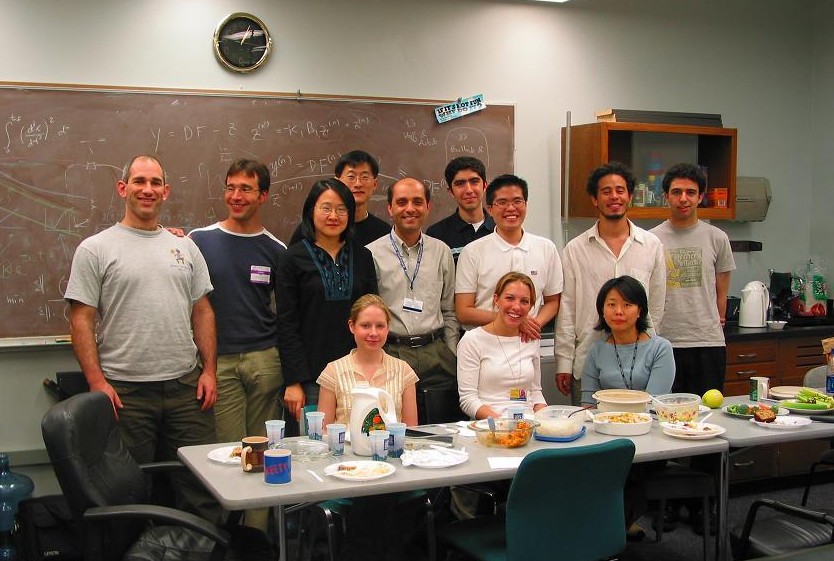
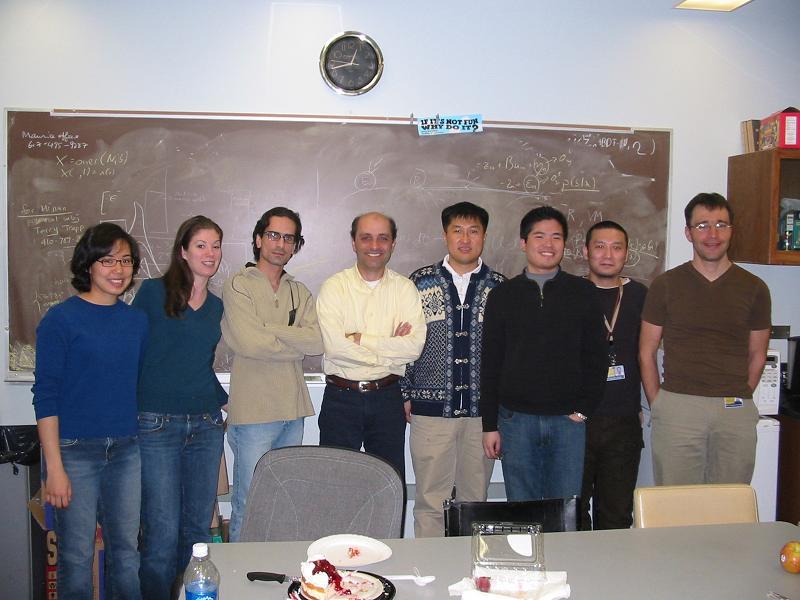
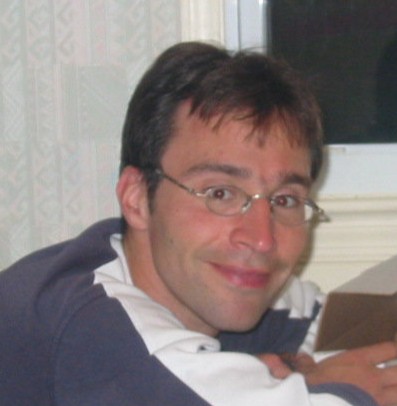
Jörn joined the lab in 2003 after completing his PhD in Psychology from University of California Berkeley. With Jörn, we built an fMRI compatible robot and became the first lab in the world to study reach adaptation using functional magnetic resonance imaging. Jörn brought the tools of statistical learning to the problem of motor adaptation, altering the path of motor learning research to incorporate optimal estimation and control. He subsequently became an Assistant Professor at University of Bangor, UK, then Associate Professor at University College London. He is currently Research Chair for Motor Control and Computational Neuroscience, University of Western Ontario.
Ideas developed by Jorn
Selected publications
Diedrichsen J, Shadmehr R, Ivry RB. The coordination of movement: optimal feedback control and beyond. Trends in Cognitive Sciences. 2010;14:31–39.
Kluzik J, Diedrichsen J, Shadmehr R, Bastian AJ. Reach adaptation: what determines whether we learn an internal model of the tool or adapt the model of our arm? Journal of Neurophysiology. 2008;100:1455–1464.
Huang VS, Shadmehr R, Diedrichsen J. Active learning: learning a motor skill without a coach. Journal of Neurophysiology. 2008;100:879–887.
Tseng YW, Diedrichsen J, Krakauer JW, Shadmehr R, Bastian AJ. Sensory prediction errors drive cerebellum-dependent adaptation of reaching. Journal of Neurophysiology. 2007;98:54–62.
Diedrichsen J, Criscimagna-Hemminger SE, Shadmehr R. Dissociating timing and coordination as functions of the cerebellum. Journal of Neuroscience. 2007;27:6291–6301.
Diedrichsen J. A spatially unbiased atlas template of the human cerebellum. NeuroImage. 2006;33:127–138.
Diedrichsen J, Hashambhoy Y, Rane T, Shadmehr R. Neural correlates of reach errors. Journal of Neuroscience. 2005;25:9919–9931.
Diedrichsen J, Shadmehr R. Detecting and adjusting for artifacts in fMRI time series data. NeuroImage. 2005;27:624–634.
Gallery