Research
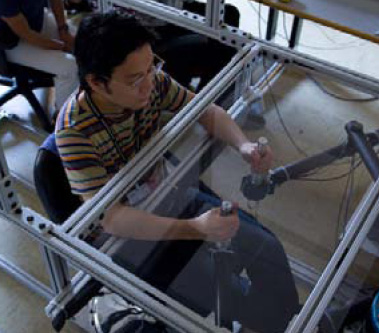
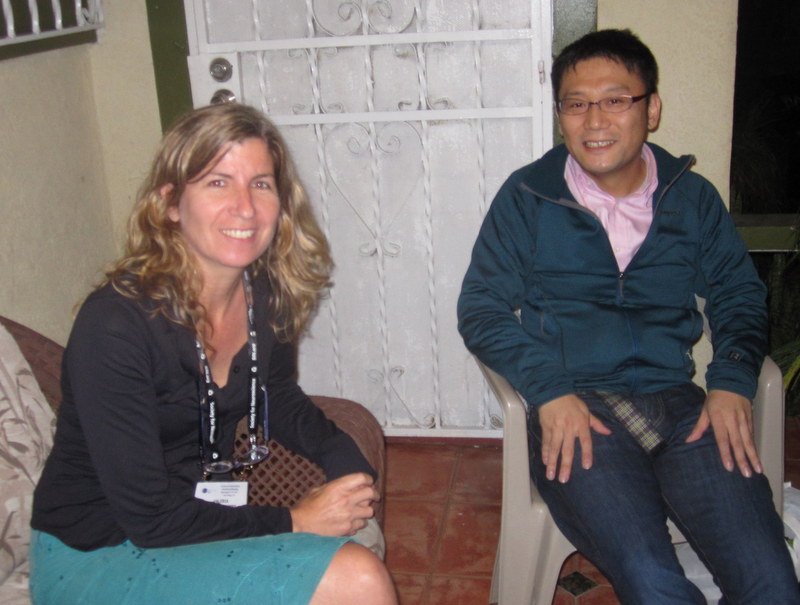
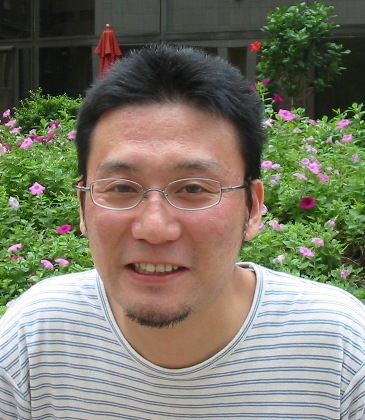
Jun joined the lab as a postdoc in 2005 after completing his PhD from University of Tokyo. Jun played a leading role in a number of new directions for the lab. He demonstrated that adaptation was not merely a process of canceling a perturbation, but rather re-optimization, i.e., finding a new way to maximize probability of acquiring reward. This implied that there could not be a ‘desired trajectory’ in the brain, but rather that all learning was ultimately a search for reward. He discovered that in cerebellar disease, there was intact learning from reward prediction errors, but a specific impairment in learning from sensory prediction errors. In this way, it was possible to improve performance of cerebellar patients, something that had been very difficult to do before Jun’s work. He discovered that in autism, children exhibited an abnormally strong sensitivity proprioception during learning. Perhaps the most important of his many contributions is the idea that the brain maintains multiple learning systems, and that during motor learning, two systems cooperate: a reward based learning system, and a sensory prediction based learning system. The former is spared in people with cerebellar damage. He discovered a way to behaviorally examine the consequence of learning with each system. He is currently Professor in the Faculty of Engineering, Information, and Systems, University of Tsukuba, Japan.
Ideas developed by Jun
Selected publications
Pekny SE, Izawa J, Shadmehr R. Reward dependent modulation of movement variability. Journal of Neuroscience. 2015;35:4015–4024.
Izawa J, Criscimagna-Hemminger SE, Shadmehr R. Cerebellar contributions to reach adaptation and learning sensory consequences of action. Journal of Neuroscience. 2012;32:4230–4239.
Izawa J, Pekny SE, Marko MK, Haswell C, Shadmehr R, Mostofsky SH. Motor learning relies on integrated sensory inputs in ADHD, but over-selectively on proprioception in Autism spectrum conditions. Autism Research. 2012;5:124–136.
Orban de Xivry JJ, Marko MK, Pekny SE, Pastor D, Izawa J, Celnik P, Shadmehr R. Stimulation of the human motor cortex alters generalization patterns of motor learning. Journal of Neuroscience. 2011;31:7102–7110.
Izawa J, Shadmehr R. Learning from sensory and reward prediction errors during motor adaptation. PLoS Computational Biology. 2011;7:e1002012.
Haswell C, Izawa J, Dowell L, Mostofsky SH, Shadmehr R. Representation of internal models of action in the autistic brain. Nature Neuroscience. 2009;12:970–972.
Izawa J, Shadmehr R. Online processing of uncertain information in visuomotor control. Journal of Neuroscience. 2008;28:11360–11368.
Izawa J, Rane T, Donchin O, Shadmehr R. Motor adaptation as a process of reoptimization. Journal of Neuroscience. 2008;28:2883–2891.
Gallery