Research
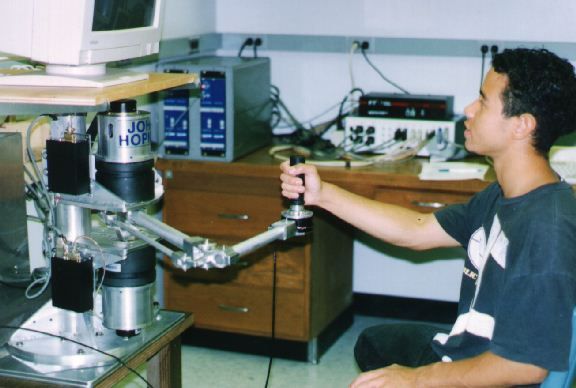
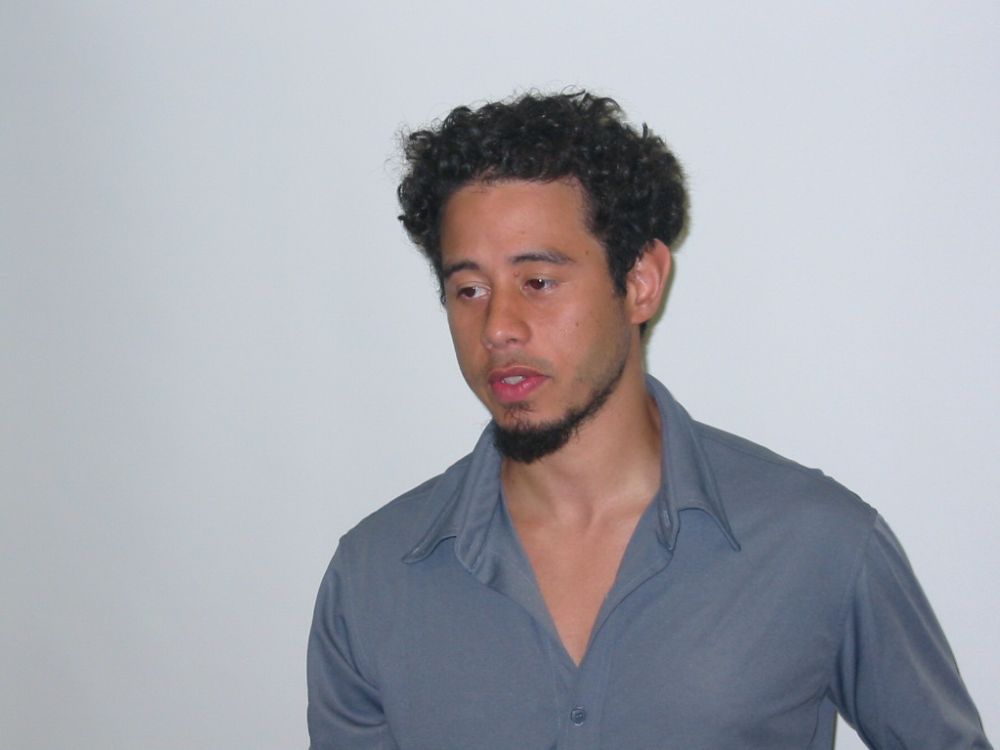
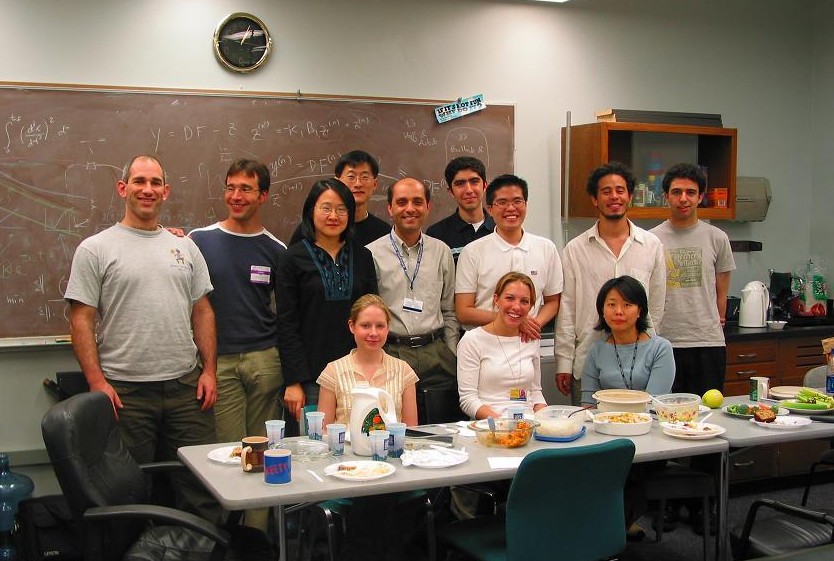
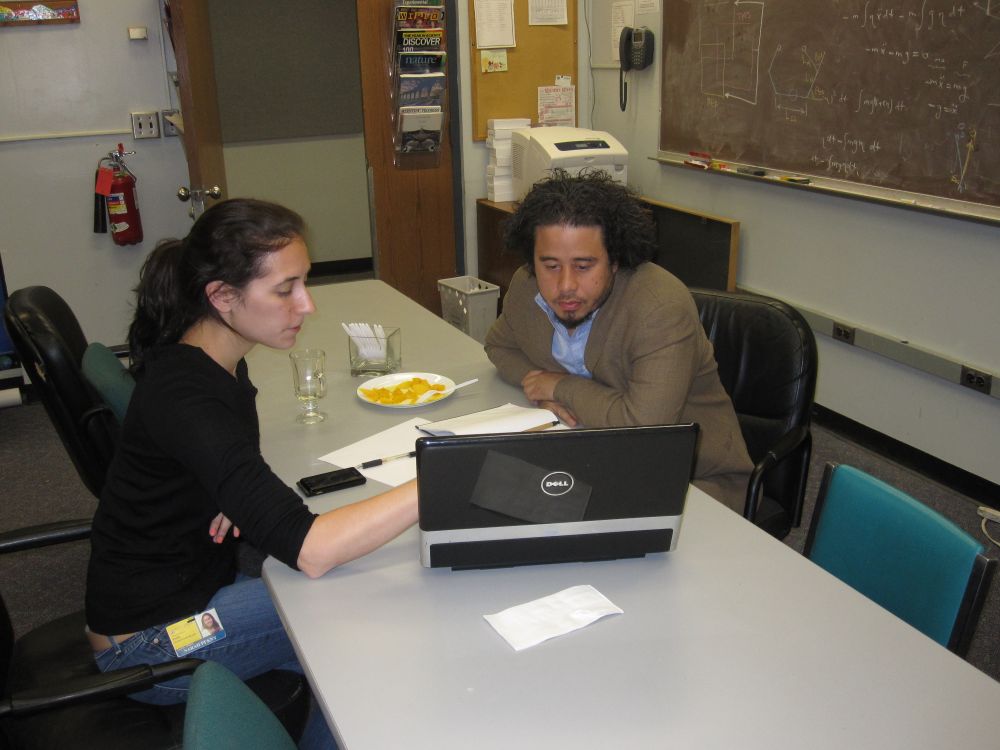
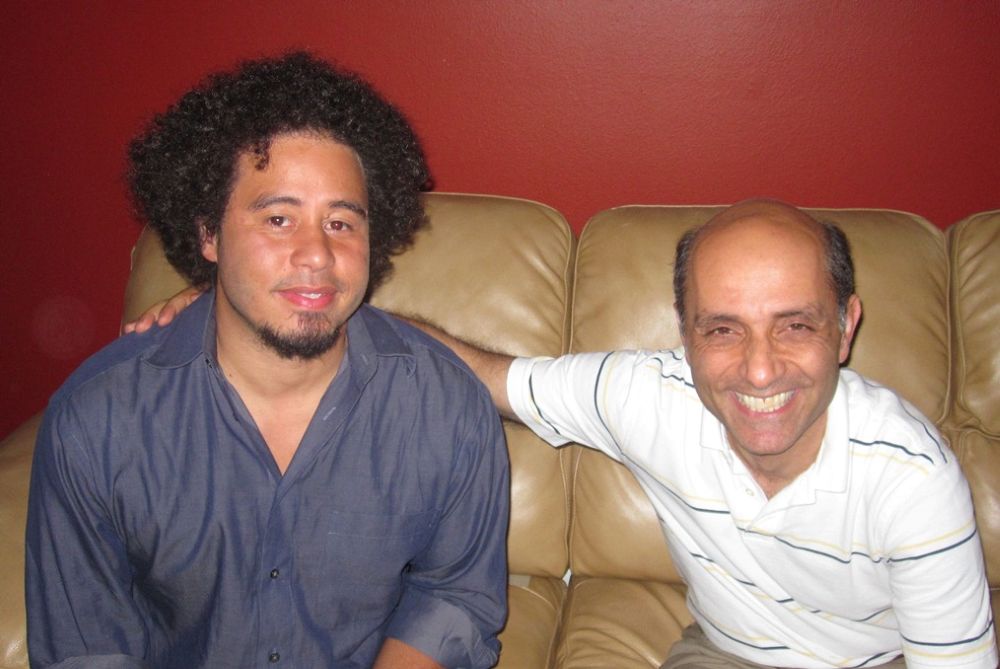
Maurice was the second graduate student to join the lab. He joined in 1995, after having completed a triple major in Mathematics, Biomedical Engineering, and Electrical Engineering from Vanderbilt University. When he joined, our lab was pretty much an empty room. Along with Kurt Thoroughman, Maurice built much of the robotic apparatus that became the basis for our experiments. Maurice was an MD/PhD student, enrolled in the Biomedical Engineering program as well as the Medical Student training program at Hopkins. Early in his medical school years he struggled, but despite that, he perservered and eventually succeeded. With his research, he changed the direction of the lab by studying how diseases that affect the basal ganglia or the cerebellum affect control of movements. He invented the two-state model of motor adaptation, a significant breakthrough that has helped demonstrate that motor learning is supported by multiple timescales of memory. The two-state model made the remarkable prediction that with passage of time motor memories will show spontaneous recovery, something that was confirmed experimentally. He discovered that a fundamental function of the cerebellum was to learn internal models for the purpose of controlling motion of the arm. He completed his PhD on 12/2000.
For his research, Maurice was awarded the David Israel Macht Prize in recognition of outstanding scientific work by a doctoral student in the Johns Hopkins School of Medicine. He completed the MD program in 2003, and stayed on to do a postdoc in the lab until 2005. He subsequently became an Assistant Professor at the School of Engineering and Applied Sciences at Harvard University. He is now the Gordon McKay Professor of Bioengineering at Harvard.
Ideas developed by Maurice
Selected publications
Smith MA, Brandt J, Shadmehr R. Motor disorder in Huntington's disease begins as a dysfunction in error feedback control. Nature. 2000;403:544–549. News & Views
Smith MA, Shadmehr R. Error correction and the basal ganglia. Trends in Cognitive Sciences. 2000;4:367–369.
Smith MA. Error correction, the basal ganglia, and the cerebellum. PhD thesis, Johns Hopkins University. 2001.
Hwang EJ, Donchin O, Smith MA, Shadmehr R. A gain-field encoding of limb position and velocity in the internal model of arm dynamics. PLoS Biology. 2003;1(2):209–220. News & Views
Smith MA, Shadmehr R. Intact ability to learn internal models of arm dynamics in Huntington's disease but not cerebellar degeneration. Journal of Neurophysiology. 2005;93:2809–2821.
Hwang EJ, Smith MA, Shadmehr R. Adaptation and generalization in acceleration dependent force fields. Experimental Brain Research. 2006;169:496–506.
Hwang EJ, Smith MA, Shadmehr R. Dissociable effects of the implicit and explicit memory systems on learning control of reaching. Experimental Brain Research. 2006;173:425–437.
Smith MA, Ghazizadeh A, Shadmehr R. Interacting adaptive processes with different timescales underlie short-term motor learning. PLoS Biology. 2006;4:e179. News & Views
Chen H, Hua SE, Smith MA, Lenz FA, Shadmehr R. Effects of cerebellar thalamus disruption on adaptive control of reaching. Cerebral Cortex. 2006;16:1462–1473.
Gallery