Research
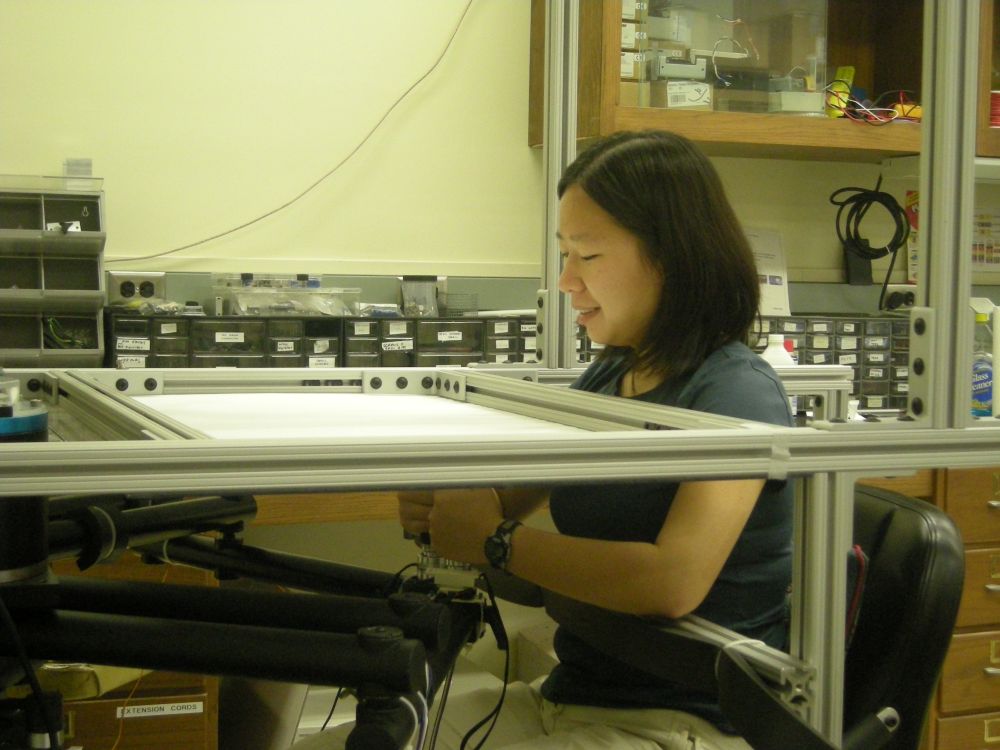
Minnan completed her BS and MS in Electrical Engineering from MIT and then joined the lab in 2005. Minnan built the electronics and control harware for the two-arm robot in our lab. The instruments that she designed and constructed made it possible for us to measure bimanual control.
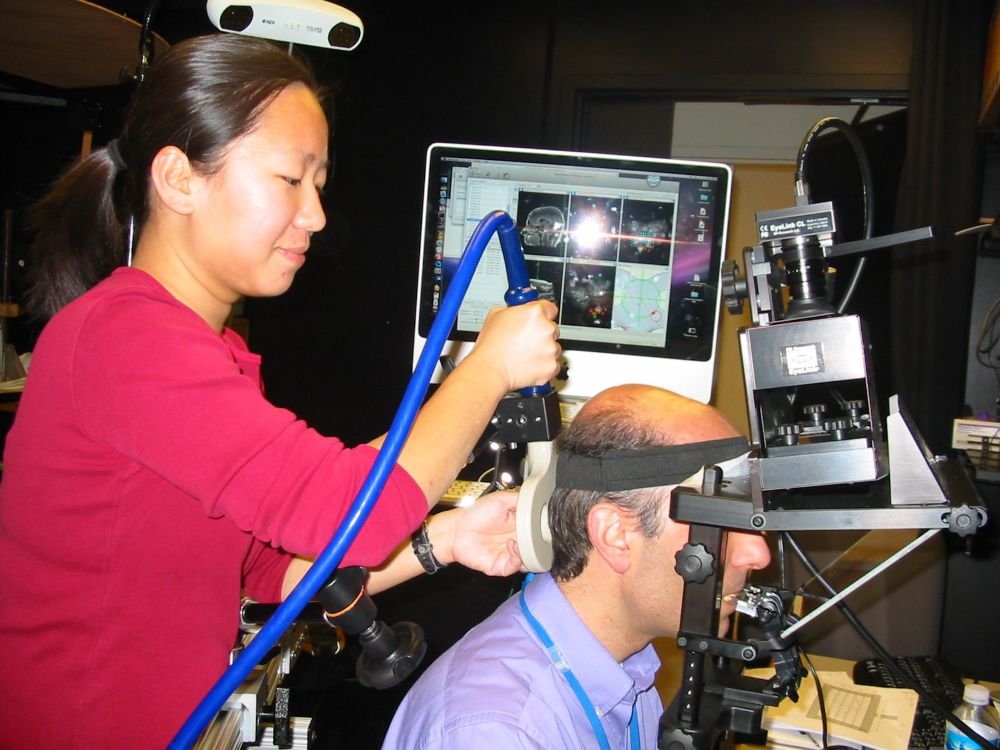
She discovered that stimulus value affected vigor of saccadic eye movements. This demonstrated that the way the brain evaluated economic quantities like reward and effort was reflected in vigor of movements. She discovered that a function of the cerebellum was to monitor the variability in motor commands and compensate for it through internal feedback. Minnan also discovered that the fast timescale of adaptation was impaired in cerebellar disease. Finally, Minnan discovered that transcranial magnetic stimulation of the brain could disrupt an ongoing saccade, but that this perturbation was compensated with motor commands that arrived later in the same movement.
She completed a PhD in Biomedical Engineering on May 2010. She subsequently became a postdoc at the Massachusetts Eye and Ear Infirmary, Harvard University. She is now Director of AI/ML at Takeda.
Ideas developed by Minnan
Selected publications
Xu-Wilson M, Tian J, Shadmehr R, Zee DS. TMS perturbs saccade trajectories and unmasks an internal feedback controller for saccades. Journal of Neuroscience. 2011;31:11537–11546.
Shadmehr R, Orban de Xivry JJ, Xu-Wilson M, Shih TY. Temporal discounting of reward and the cost of time in motor control. Journal of Neuroscience. 2010;30:10507–10516. News & Views
Xu-Wilson M, Chen-Harris H, Zee DS, Shadmehr R. Cerebellar contributions to adaptive control of saccades in humans. Journal of Neuroscience. 2009;29:12930–12939.
Xu-Wilson M, Zee DS, Shadmehr R. The intrinsic value of visual information affects saccade velocities. Experimental Brain Research. 2009;196:475–481.
Xu M. Adaptive control of saccades via internal feedback. PhD thesis, Johns Hopkins University. 2010.
Gallery