Shadmehr Laboratory
Laboratory for Computational Motor Control · Johns Hopkins University
Paul Hage

Paul Hage

PhD (2024)

Research

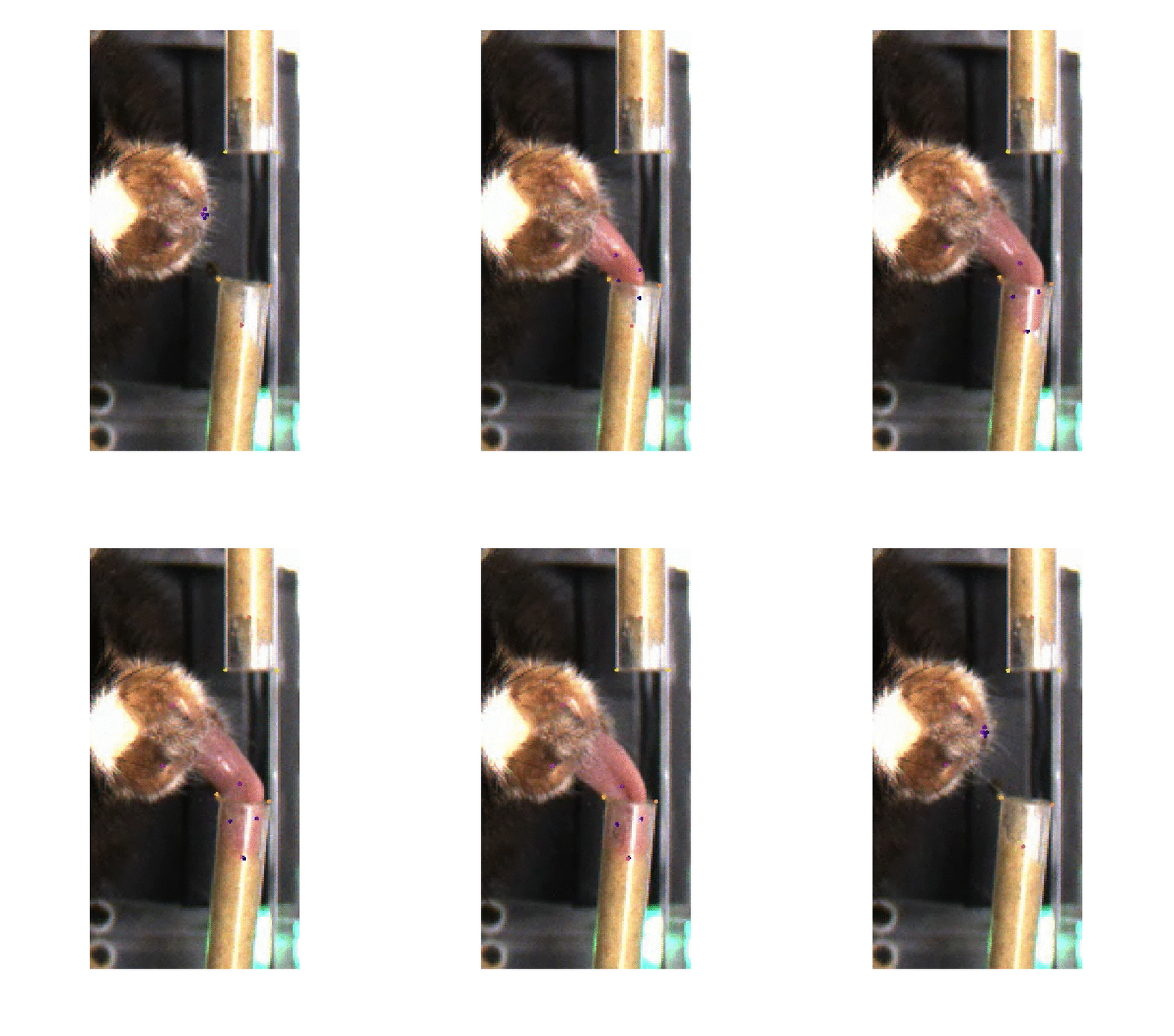
Paul joined the laboratory in 2018 as a graduate student in the BME PhD program after graduating Magna Cum Laude with BS in Electrical Engineering from Univ. of Washington, where he was a Mary Gates Research Scholar. Paul's research focused on understanding the neural basis of movement control by the cerebellum, particularly control of the tongue. He designed the image guided procedures for 3D printed parts that we use in our marmoset research, which allow for precise targetting of cerebellar regions. He led the team of students that investigated the role of the cerebellum in control of tongue movements. He was the first person to record from the marmoset lingual cerebellum, discovering that the function of this region was to produces forces that would retract the tongue, playing a fundamental role in stopping the movements of the tongue as it approaches its target. Paul graduated in 2024 and subsequently joined the Johns Hopkins Applied Physics Laboratory.

Ideas developed by Paul

  • Demonstrating that Purkinje cells control the deceleration of tongue movements. Paul led research investigating how cerebellar Purkinje cells contribute to the control of tongue movements in behaving marmosets. This work showed that Purkinje cell activity influences the deceleration of the tongue, providing evidence that the cerebellum contributes to movement control by regulating how movements are brought to a stop.
  • Investigating how populations of Purkinje cells perform vector computations. Paul contributed to research demonstrating how the activity of individual Purkinje cells can be represented as vectors describing their influence on movement. The combined activity of a population of Purkinje cells produces a vector sum that determines the direction and magnitude of the resulting motor output. This work provided a computational framework for understanding how cerebellar populations transform neural activity into movement commands.
  • Revealing how climbing fiber signals and Purkinje cell activity influence movement. Paul contributed to studies showing that climbing fiber inputs distinguish sensory events from movement plans, and that complex spikes can perturb ongoing movements. These findings helped establish a relationship between the information carried by climbing fibers and the sensorimotor influence of individual Purkinje cells, providing insights into how cerebellar circuits contribute to movement control and learning.
  • Investigating the importance of synchronous Purkinje cell spiking during movement. Paul contributed to experiments demonstrating that Purkinje cells exhibit coordinated spike timing during behavior. This work highlighted how precisely timed activity across populations of cerebellar neurons may contribute to motor control, suggesting that the temporal organization of spikes, in addition to average firing rates, is important for cerebellar computation.
  • Demonstrating how effort costs shape foraging decisions and movement vigor. Paul investigated how marmosets adjust their behavior according to the effort required to obtain rewards. His work showed that the cost of harvesting influences both decisions about when to leave a rewarding location and the vigor of movements. These findings connected economic theories of foraging with the control of action, suggesting that decisions and movement execution are influenced by common computations involving reward and effort.
  • Developing methods and tools for cerebellar neurophysiology. Paul contributed to establishing behavioral training and electrophysiological recording methods for studying the cerebellum in awake marmosets. He also participated in the development of P-sort, an open-source tool for analyzing Purkinje cell recordings, and methods for rejuvenating silicon probes for repeated use. These contributions helped establish an experimental platform for studying cerebellar activity during natural movements.
  • Selected publications

    Fakharian MA, Shoup AM, Hage P, Elseweifi HY, Shadmehr R. A vector calculus for neural computation in the cerebellum. Science. 2025;388(6749):869–875.

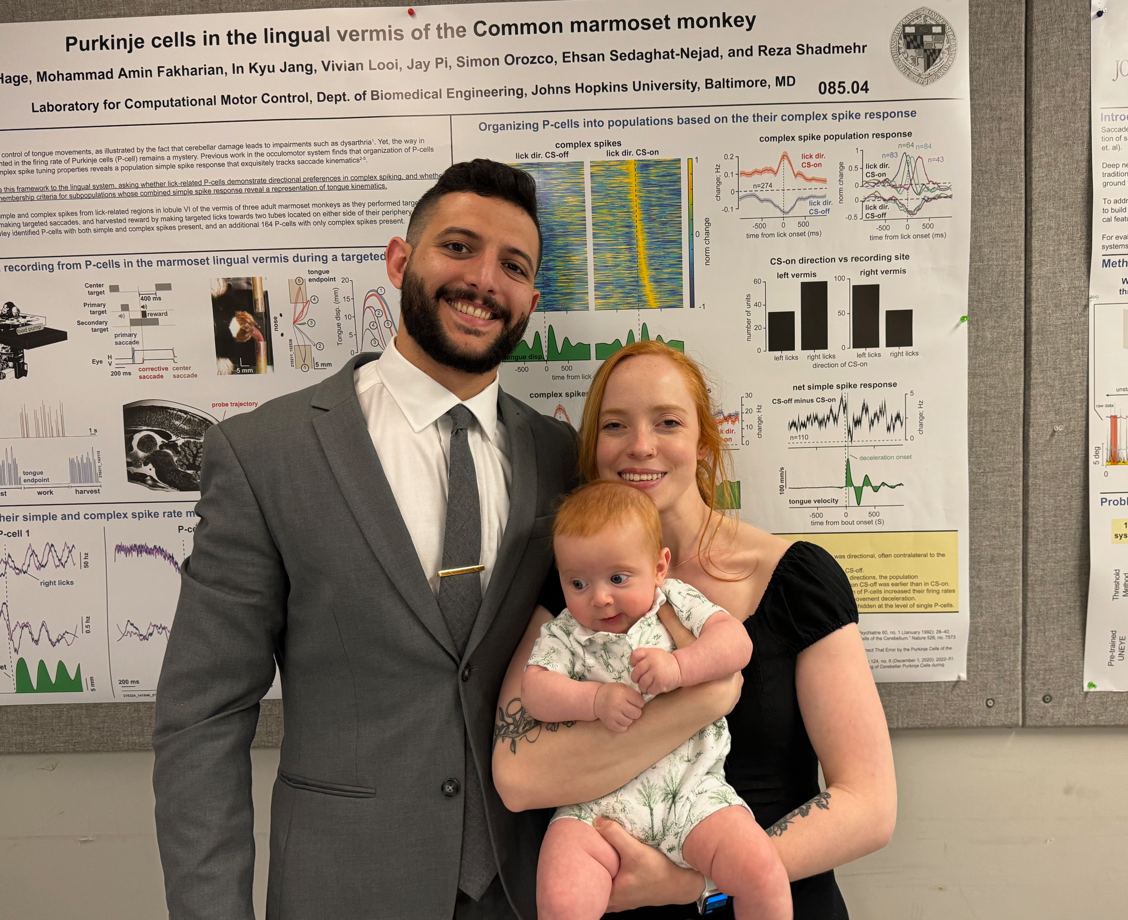
    Hage P, Fakharian MA, Shoup AM, Pi JS, Sedaghat-Nejad E, Orozco SP, Jang IK, et al. Purkinje cells of the cerebellum control deceleration of tongue movements. PLoS Biology. 2025;23(4):e3003110.

    Shoup AM, Porwal N, Fakharian MA, Hage P, Orozco SP, Shadmehr R. Rejuvenating silicon probes for acute neurophysiology. Journal of Neurophysiology. 2024;132(1):308–315.

    Pi JS, Fakharian MA, Hage P, Sedaghat-Nejad E, Muller SZ, Shadmehr R. The olivary input to the cerebellum dissociates sensory events from movement plans. Proceedings of the National Academy of Sciences. 2024;121(17):e2318849121.

    Hage P, Jang IK, Looi V, Fakharian MA, Orozco SP, Pi JS, Sedaghat-Nejad E, Shadmehr R. Effort cost of harvest affects decisions and movement vigor of marmosets during foraging. eLife. 2023;12:RP87238.

    Muller SZ, Pi JS, Hage P, Fakharian MA, Sedaghat-Nejad E, Shadmehr R. Complex spikes perturb movements and reveal the sensorimotor map of Purkinje cells. Current Biology. 2023;33(22):4869–4879.

    Sedaghat-Nejad E, Pi JS, Hage P, Fakharian MA, Shadmehr R. Synchronous spiking of cerebellar Purkinje cells during control of movements. Proceedings of the National Academy of Sciences. 2022;119(14):e2118954119.

    Sedaghat-Nejad E, Fakharian MA, Pi JS, Hage P, Kojima Y, Soetedjo R, Ohmae S, Medina JF, Shadmehr R. P-sort: an open-source software for cerebellar neurophysiology. Journal of Neurophysiology. 2021;126(4):1055–1075.

    Sedaghat-Nejad E, Herzfeld DJ, Hage P, Karbasi K, Palin T, Wang X, Shadmehr R. Behavioral training of marmosets and electrophysiological recording from the cerebellum. Journal of Neurophysiology. 2019;122:1502–1517.

    Paul Hage, Neural control of the tongue in the common marmoset. PhD dissertation, Johns Hopkins University. 2024.

    Gallery
    ← Return to lab members