Sarah Pekny
PhD (2014)
Research
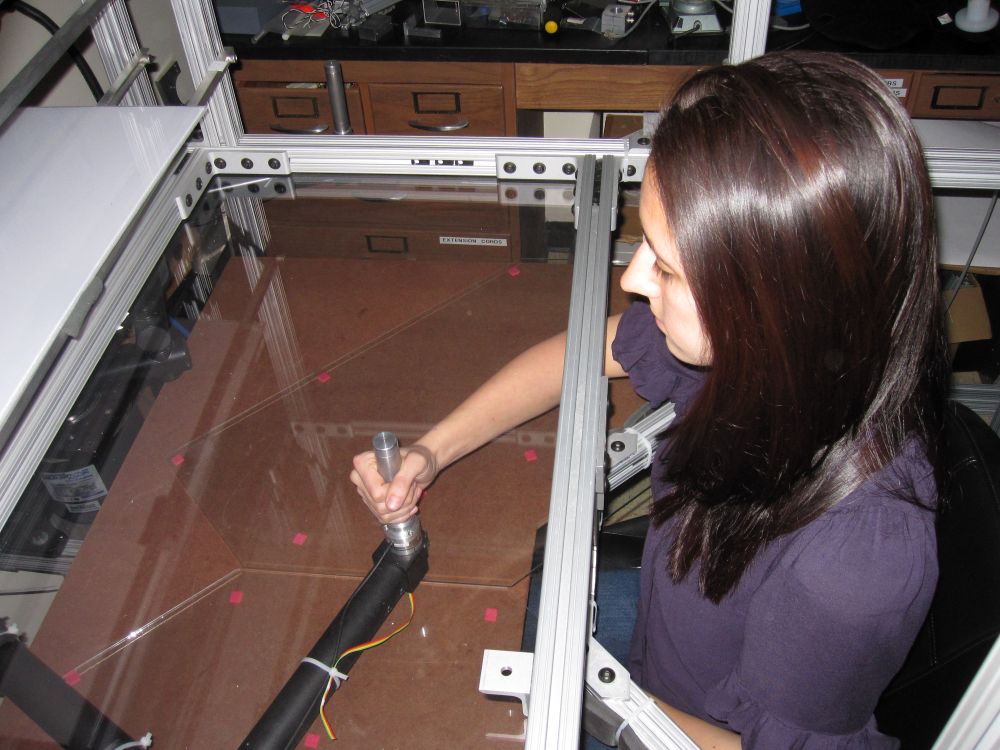
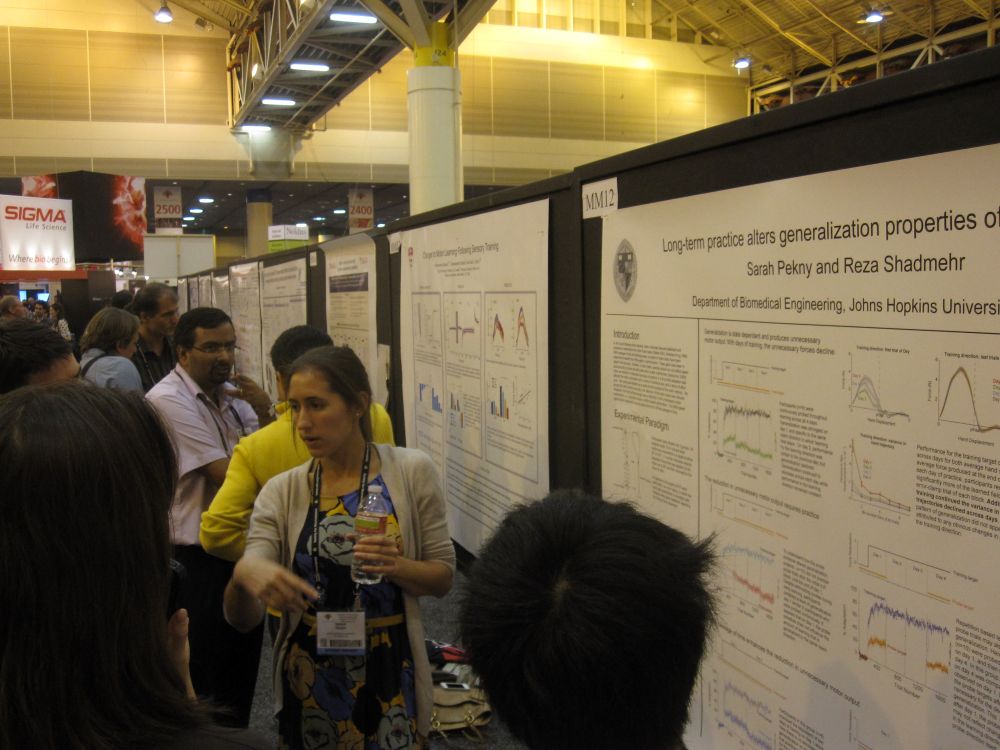
Sarah joined the lab in 2009 as a graduate student in the BME PhD program, after completing her BS in Bioengineering with honors from Penn State University, where she received the Evan Pugh Scholar Award, the Leonard Scholars Program Scholarship, and the Nicholas Petrick Memorial Scholarship. Sarah's research demonstrated that variability in movements is partially a form of exploration that is driven by the recent history of rewards. She showed that when the function of the human basal ganglia is compromised, the reward-dependent control of movement variability is impaired. She discovered that movement efficiency is enhanced when time is allowed to pass between periods of practice. That is, during the time away from practice, the brain appears to continue processing the acquired motor memory, pruning it so that the movement is executed more efficiently. She demonstrated that adaptation followed by washout or reverse adaptation did not "washout" or erase the previous memory, but rather installed a new memory that competed with the old. Reinforcement appeared to be a critical signal that afforded protention from erase, and lack of reinforcement encouraged retrieval of the previously acquired memory. Sarah completed her dissertation in 2015. She is now a mother and homemaker.
Ideas developed by Sarah
Selected publications
Pekny SE, Izawa J, Shadmehr R. Reward dependent modulation of movement variability. Journal of Neuroscience. 2015;35:4015–4024.
Pekny SE, Shadmehr R. Optimizing effort: increased efficiency of motor memory with time away from practice. Journal of Neurophysiology. 2015;113:445–454.
Pekny SE. The role of reinforcement and contextual cues in the acquisition and expression of motor memories. PhD thesis, Johns Hopkins University. 2014.
Izawa J, Pekny SE, Marko MK, Haswell C, Shadmehr R, Mostofsky SH. Motor learning relies on integrated sensory inputs in ADHD, but over-selectively on proprioception in Autism spectrum conditions. Autism Research. 2012;5:124–136.
Orban de Xivry JJ, Marko MK, Pekny SE, Pastor D, Izawa J, Celnik P, Shadmehr R. Stimulation of the human motor cortex alters generalization patterns of motor learning. Journal of Neuroscience. 2011;31:7102–7110.
Pekny SE, Criscimagna-Hemminger SE, Shadmehr R. Protection and expression of human motor memories. Journal of Neuroscience. 2011;31:13829–13839.
Gallery