Research
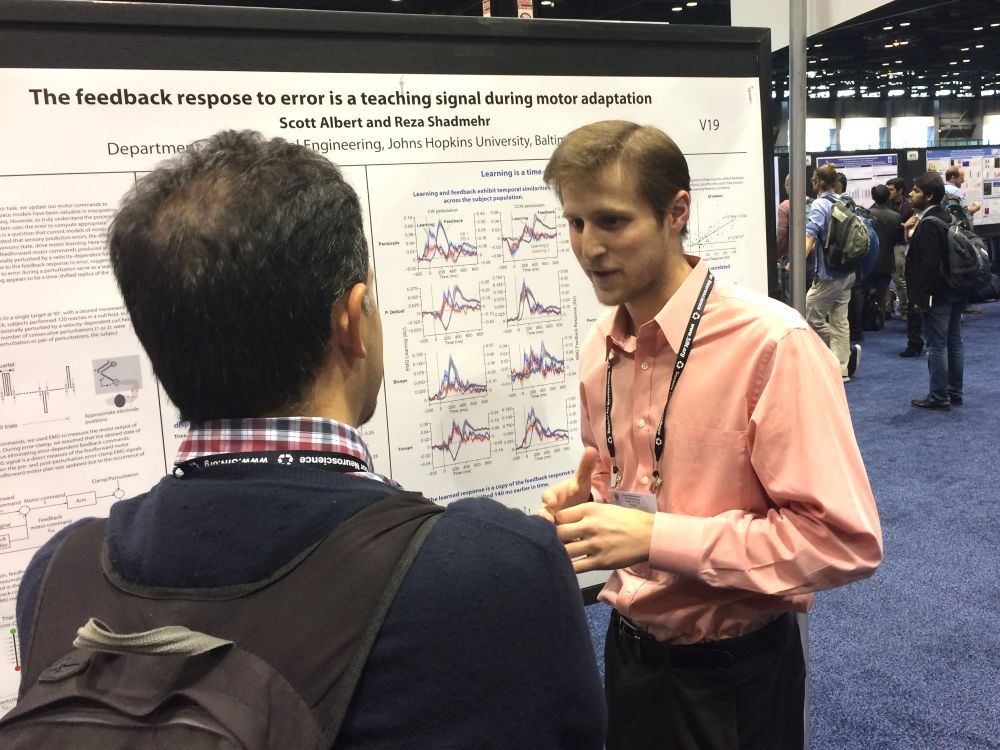
Scott joined the lab in 2013 as a graduate student in the BME PhD program, after completing an undergraduate program in Chemical Engineering from Lafayette College, where he was a Marquis Scholar. As an undergraduate, Scott won the 2012 Othmer Award from the American Institute of Chemical Engineers.Scott discovered that during motor learning, the teaching signal that was used by the brain to improve performance was partly generated by existing reflex circuits whose primary function is to respond to unexpected perturbations. To better quantify the mechanisms of motor learning, he implemented a mathematical tool that uncovered hidden states of the adaptation process.
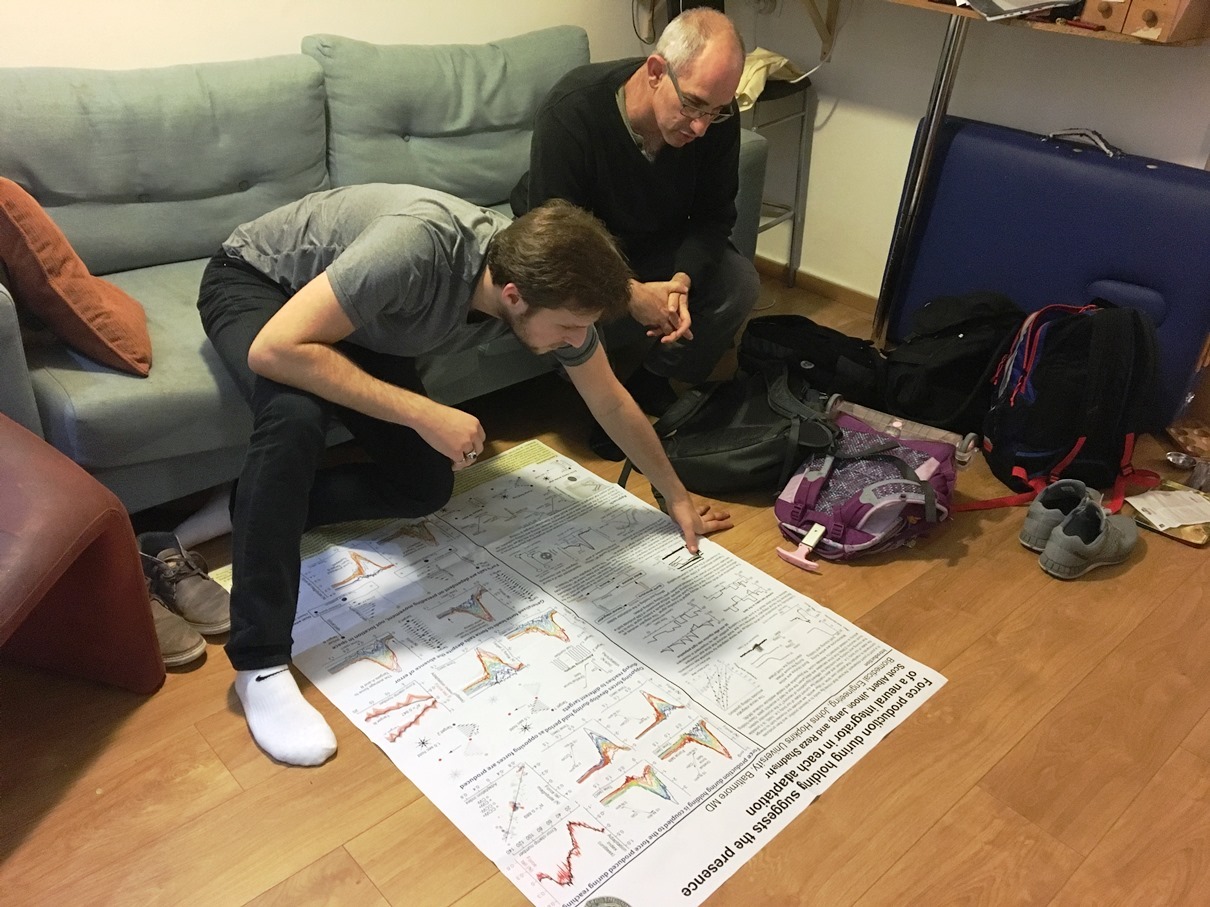
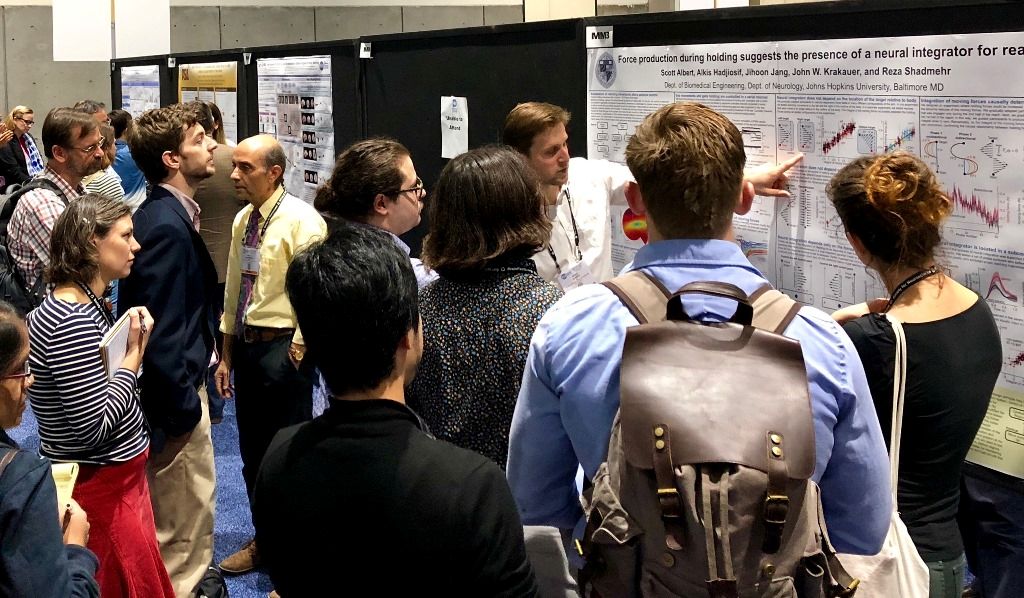
His major discovery was evidence for the idea of a reach integrator. He performed a series of experiments that found evidence for a possibly subcortical system that specializes in control of limb posture. This idea challenged the common notion that the motor cortex generates both the commands that move the arm, as well as the commands that hold it still. Rather, Scott's work suggested that the commands that hold the arm may be generated downstream of the motor cortex, in an unknown region that appears to mathematically integrate the real-time motor commands.
In 2015 he was awarded an NRSA Fellowship from the National Institutes of Health. In 2016 he won the Outstanding Teaching Assistant Award from the Johns Hopkins Biomedical Engineering Department. In 2019 he was awarded the Siebel Prize. In 2020 he was selected for the Mette Strand Award and recognized for his research at the Young Investigator Day at Johns Hopkins School of Medicine. Scott did a postdoc with Adam Hantmann at UNC Chapel Hill, and then was appointed Asst. Prof. of Biomedical Engineering, Emory University.
Ideas developed by Scott
Selected publications
Albert ST, Shadmehr R. The neural feedback response to error as a teaching signal for the motor learning system. Journal of Neuroscience. 2016;36:4832–4845.
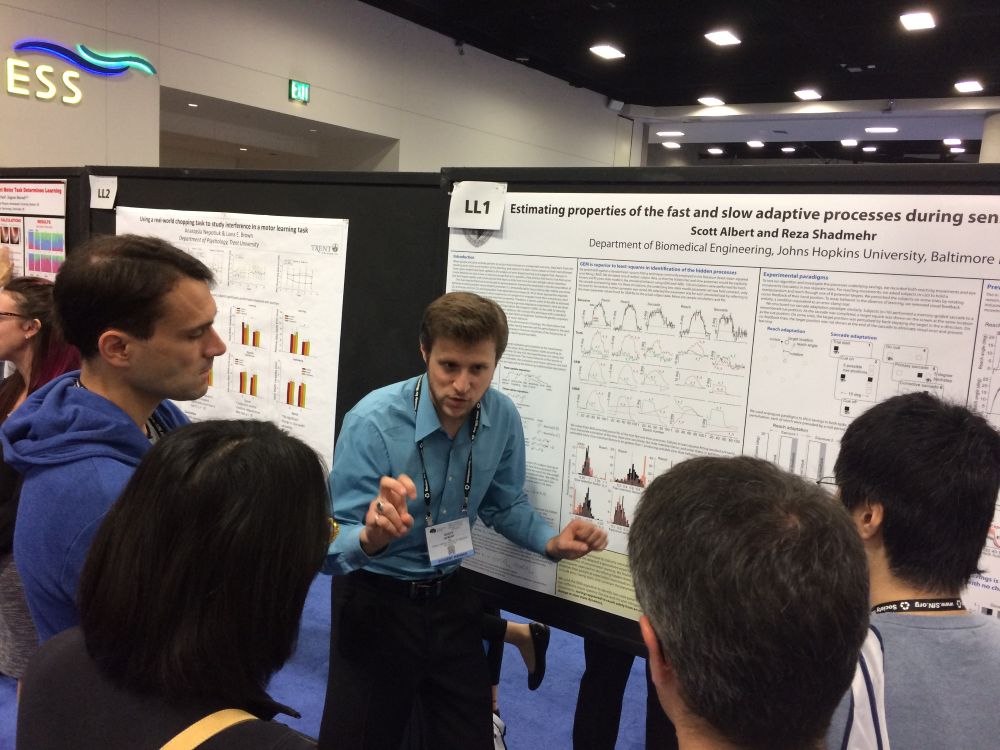
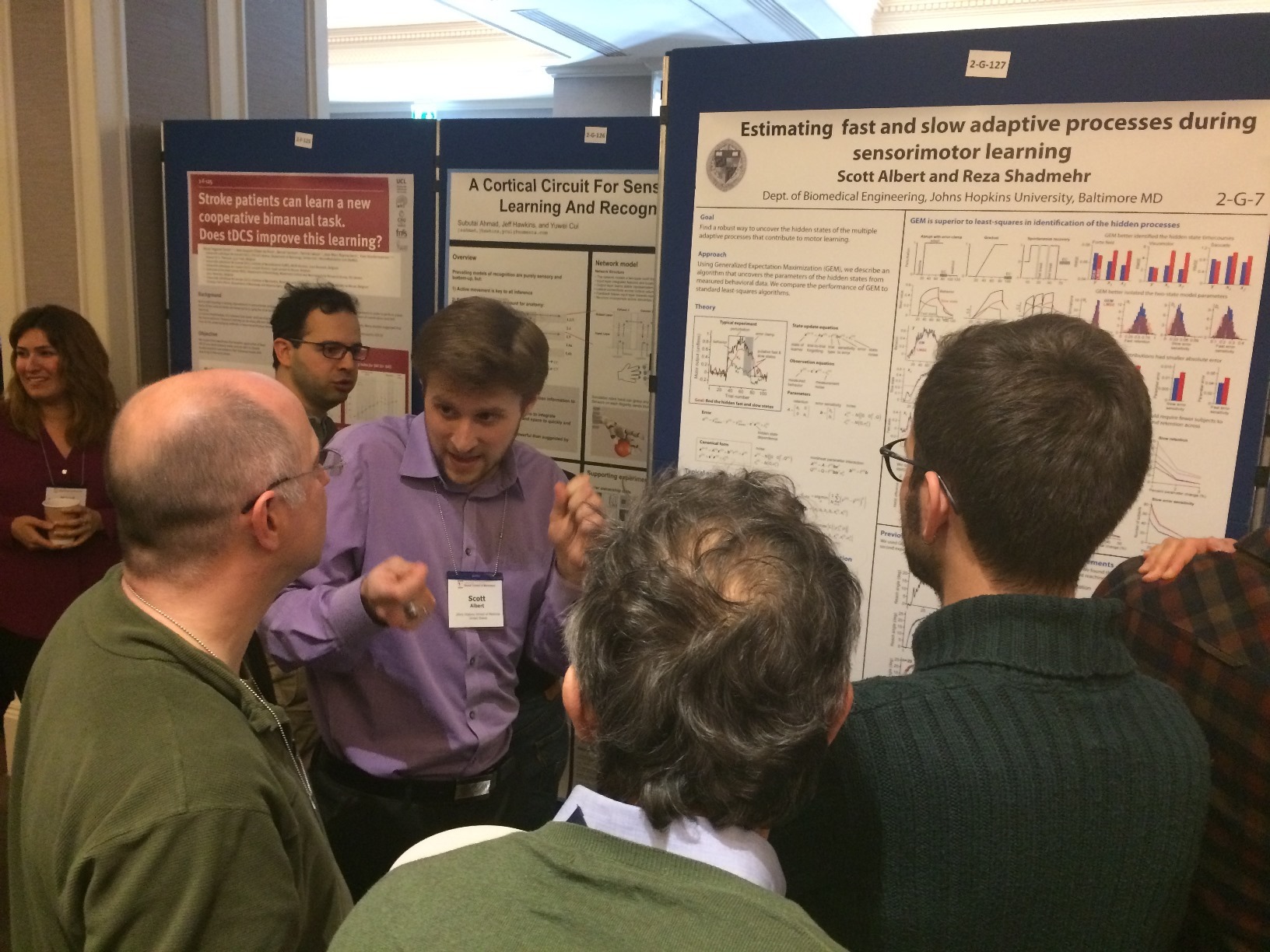
Albert ST, Shadmehr R. Estimating properties of the fast and slow adaptive processes during sensorimotor adaptation. Journal of Neurophysiology. 2018;119:1367–1393. Model Fitting Tools
Albert ST, Shadmehr R. The cerebellum learns to predict the physics of our movements. In: Think Tank: Forty Neuroscientists Explore the Biological Roots of Human Experience. David J. Linden (ed.). Yale University Press. 2018.
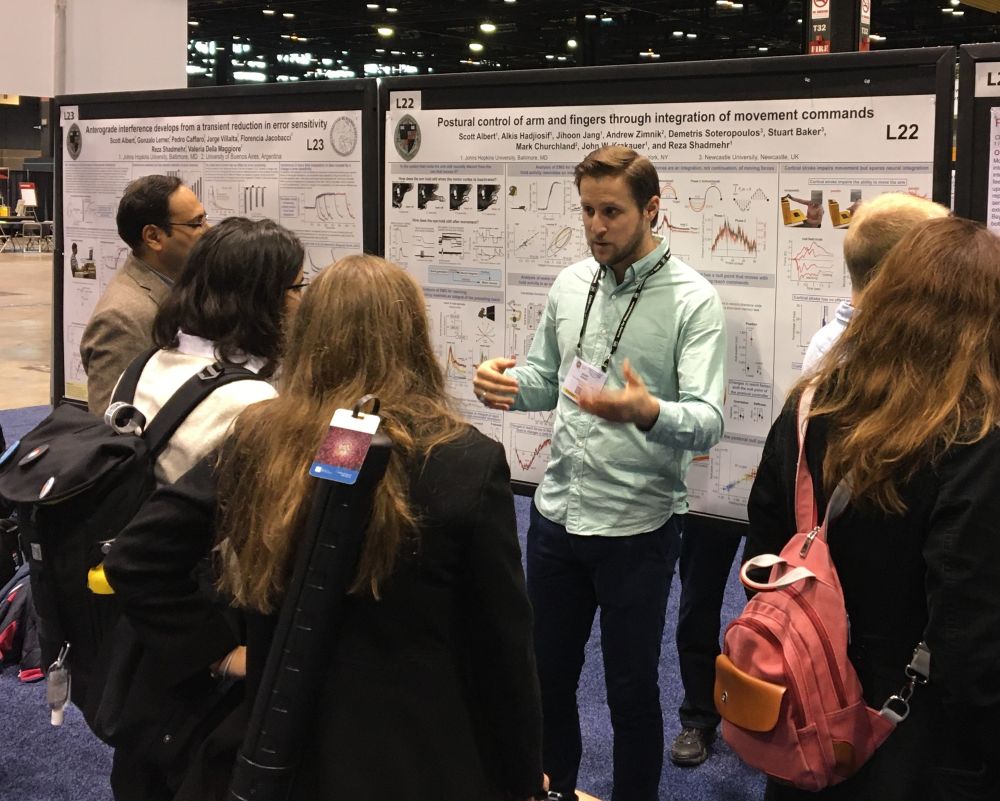
Albert ST, Hadjiosif A, Jang J, Zimnik A, Soteropoulos D, Baker S, Churchland M, Krakauer J, Shadmehr R. Postural control of arm and fingers through integration of movement commands. eLife. 2020;9:e52507.
Lerner G, Albert ST, Caffaro P, Villalta J, Jacobacci F, Shadmehr R, Della-Maggiore V. The origins of anterograde interference in visuomotor adaptation. Cerebral Cortex. 2020;30(7):4000–4010.
Albert ST, Jang J, Sheahan HR, Teunissen L, Vandevoorde K, Herzfeld DJ, Shadmehr R. An implicit memory of errors limits human sensorimotor adaptation. Nature Human Behaviour. 2021;5:920–934.
Orozco SP, Albert ST, Shadmehr R. Adaptive control of movement deceleration during saccades. PLoS Computational Biology. 2021;17(7):e1009176.
Albert ST, Jang J, Modchalingam S, Marius't Hart B, Henriques D, Lerner G, Della-Maggiore V, Haith AM, Krakauer JW, Shadmehr R. Competition between parallel sensorimotor learning systems. eLife. 2022;11:e65361.
Albert ST. The role of error-based learning in movement and stillness. PhD thesis, Johns Hopkins University. 2020.
Software and Tools Developed by Scott
A tool to fit state-space models of adaptation to sensorimotor data
Expectation Maximization (EM) is a statistical algorithm that can estimate model parameters for a data set containing latent variables. The EM algorithm identifies parameters that maximize the likelihood function for a model of learning where both movement and planning of movement are noisy processes. This technique contrasts with a minimization of squared error approach to model fitting (least-mean-squared-error or LMSE), which is the maximum likelihood estimator for a system that only has noise in the execution of movement.
The mathematical derivation of the theory, and its application to data, are described here.
Here we provide code that uses EM to fit a two-state model of learning to sensorimotor data. This tool, written by Scott Albert, uncovers the hidden fast and slow states of learning from observed behavior. For reference, we also provide code that can be used for fitting with LMSE.
For each package, download the ZIP file and refer to the README file.
Expectation Maximization (EM) packages
- Fit sensorimotor data without set breaks: EM.v1.1.zip.
- Fit sensorimotor data with set breaks: EM.v1.2.zip.
Least-mean-squared-error (LMSE) packages
- Fit sensorimotor data without set breaks: LMSE.v1.1.zip.
- Fit sensorimotor data with set breaks: LMSE.v1.2.zip.
If you encounter any issues with these toolboxes, please contact scottalbert1@gmail.com.
Gallery