Shadmehr Laboratory
Laboratory for Computational Motor Control · Johns Hopkins University
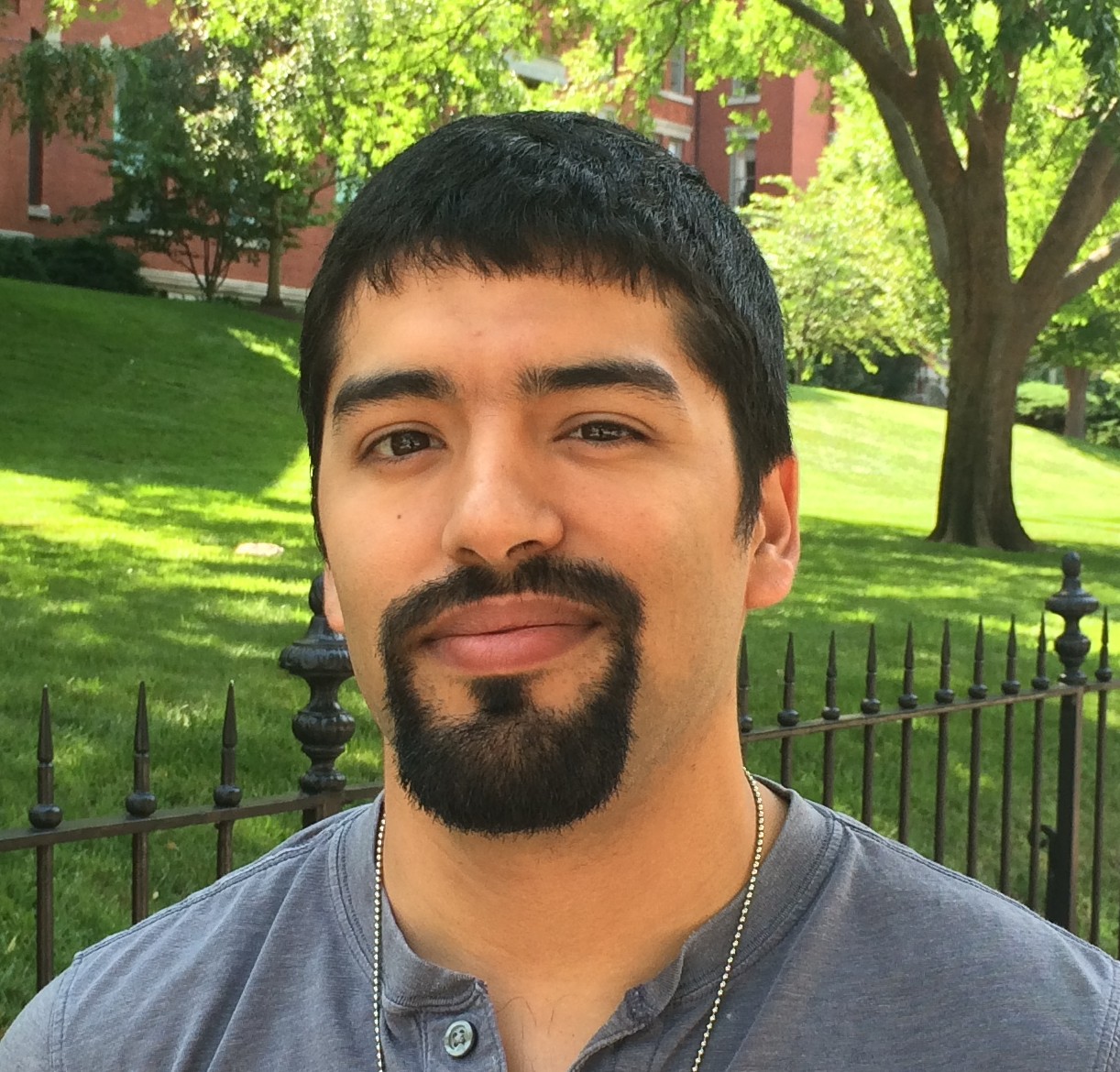
Simon Orozco

Simon Orozco

PhD (2022)

Research

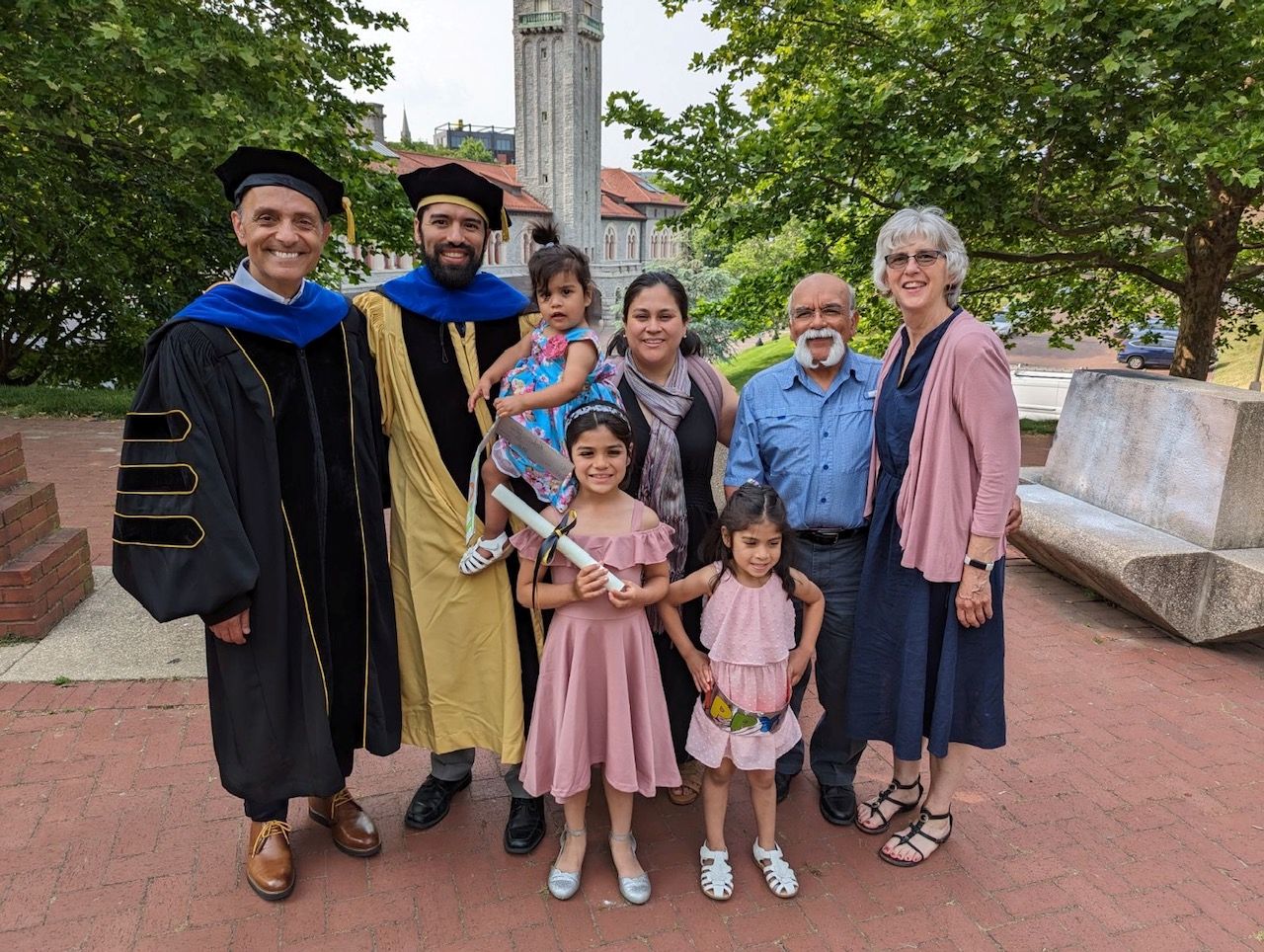
Simon joined the lab in 2015 as a post-baccalaureate scholar after earning a BS in Biochemical Sciences from Harvard, and an MS from University of Southern California. Simon is a Gates Millennium Scholar, and an accomplished athlete: he was a Kansas State Olympiad Medalist for two years, state champion in track and cross country. In 2016 he joined the BME PHD program, where his research has focused on the multiple timescales of motor memory. During his PHD he was awarded the NIH Ruth L. Kirschstein National Research Service Award. Simon completed his PhD in 2022 and took a position as Clinical Research Coordinate at the Medical College of Wisconsin .

Ideas developed by Simon

  • Understanding how the nervous system controls movement deceleration. Simon investigated how the nervous system adjusts deceleration during saccadic eye movements. His work helped characterize how the motor system adapts the commands that bring rapid eye movements to a controlled stop, providing insights into the mechanisms that ensure movement accuracy.
  • Linking effort costs to foraging decisions and movement vigor. Simon contributed to experiments investigating how marmosets adjust their behavior when the effort required to obtain a reward changes. This work demonstrated that the cost of harvesting rewards influences both decisions about when to move and the vigor of the resulting movements, connecting economic decision-making with the control of action.
  • Investigating how cerebellar Purkinje cells control tongue deceleration. Simon contributed to research examining the relationship between Purkinje cell activity and tongue movements in behaving marmosets. This work demonstrated that cerebellar Purkinje cells contribute to the control of tongue deceleration, extending our understanding of cerebellar motor control to movements involved in licking and feeding.
  • Developing methods to extend the useful life of silicon probes for neural recordings. Simon contributed to the development of methods for rejuvenating silicon probes used in acute electrophysiological experiments. This work demonstrated approaches for restoring the recording performance of previously used probes, reducing experimental costs and facilitating repeated neural recordings.
  • Selected publications

    Hage P, Fakharian MA, Shoup AM, Pi JS, Sedaghat-Nejad E, Orozco SP, Jang IK, Looi V, Elseweifi HY, Mohammadrezaei N, et al. Purkinje cells of the cerebellum control deceleration of tongue movements. PLoS Biology. 2025;23(4):e3003110.

    Shoup AM, Porwal N, Fakharian MA, Hage P, Orozco SP, Shadmehr R. Rejuvenating silicon probes for acute neurophysiology. Journal of Neurophysiology. 2024;132(1):308–315.

    Hage P, Jang IK, Looi V, Fakharian MA, Orozco SP, Pi JS, Sedaghat-Nejad E, Shadmehr R. Effort cost of harvest affects decisions and movement vigor of marmosets during foraging. eLife. 2023;12:RP87238.

    Orozco SP, Albert ST, Shadmehr R. Adaptive control of movement deceleration during saccades. PLoS Computational Biology. 2021;17(7):e1009176.

    Simon Orozco, Cross-axis saccade adaptation in humans and marmosets: behavior and neurophysiology. PhD Dissertation. Johns Hopkins University, 2023.

    Gallery
    ← Return to lab members